“Are You A Member of Sinn Féin?” - Sacked FSAI Worker Tells His Story Of Facing Persecution For Irish Language Advocacy
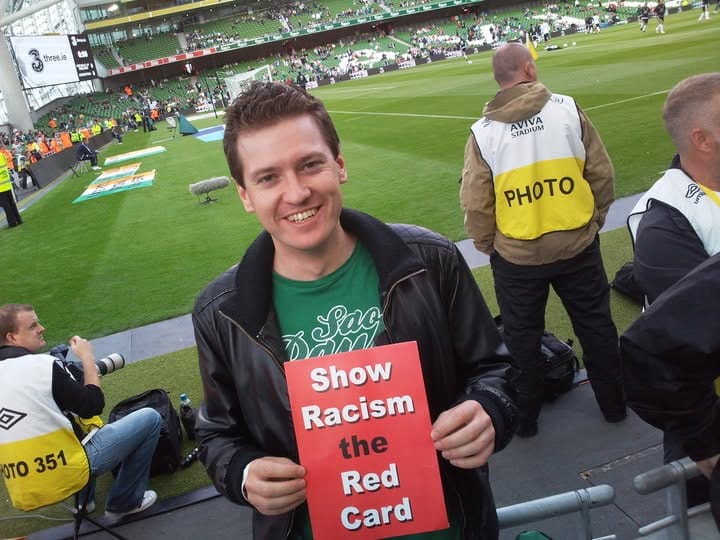
Seanán Ó Coistín, from Kilcock in County Kildare, is making headlines in the bourgeois press over his passionate defence of the Irish language, which led to him being put on administrative leave from the Food Safety Authority of Ireland (FSAI). The mainstream media, however, rotted by the remnants of British colonialism, is, as usual, skewed in its reporting, pandering to respectability politics. Over the course of a long phone conversation, Seanán told Aontacht Media his side of the story, the struggle against the State’s unwillingness to support the Irish language within its agencies.
His father being from the Gaeltacht, and educated in Irish since primary school, the indigenous language of Ireland is close to Seanán’s heart. He studied history and politics at the University of Limerick, before receiving a diploma in Irish translation, which he put to use during his time in Luxemburg working for the European Parliament. After his stint abroad, he moved back home, and took up a job at the FSAI in July 2022.
"Are you a member of Sinn Féin?"
“From the first day I walked in there, I encountered a problem, “ he says. Within minutes of meeting his new supervisor, the communications manager of the FSAI, who he asserts was nice, welcoming and friendly, she asked him three questions. “Are you from the Gaeltacht? Do you speak Irish at home? Are you a member of Sinn Féin? She didn't ask about any other party, “ he explains. “I thought at the time she was just trying to get to know me. But today, I understand that question, particularly about Sinn Féin. It was totally inappropriate and hostile, “ he says.
It is in this environment that Seanán worked in for the next few years, and as time went on, it became clear that this odd introduction was reflective of a broader trend of anti-Irish sentiment permeating State agencies across the country.
“The real problem is, and I didn't realise this at the time, is I was a bit too optimistic or too naive, about this, “ he says, explaining that “the State is not educating people who work for it in what it says in the Constitution and what it says in the Official Languages Act [...] in Article 8, Irish is the first official language because it is the national language”. If there was proper education, he adds, “you'd get rid of this stupid idea that anybody who is using Irish is a Shinner”.
Growing frustration
At first, it was the little things. “I started to notice simple things were being messed up in Irish”, he says, such as “spelling people's names correctly with a fada. The HR team hadn't a clue how to press two buttons on the keyboard. You could learn this in 10 seconds”, which left him wondering “how is it this place is full of intelligent people with all this brain power and all this education, and they can't do simple things right in Irish?”.
The longer he was there, the more serious cracks started to show in the agency’s use of Irish. “One day, right, in 2023, I was looking at the footer just by chance in the outgoing emails, and it is in English and in Irish at the bottom. I just read it. There were 7 spelling and grammatical mistakes, “ he says, adding that “this would never happen with the English version. Irish slop is okay, but English, no”. In another incident, a logo on the reception had to be replaced “in secret over the weekend”, as it had “about 3 or 4 spelling mistakes”, which no one from the communications department to the construction company noticed. When Freedom of Information Act (FOIA) requests came in Irish, he was the only one who could handle them, as no one else on the team spoke Irish to the necessary levels.
He recalls seeing a middle-aged manager who had to use Tipp-Ex to add a fada on her name to the sign above her desk. “I mentioned it to her, and she says, I didn't want to cause a fuss with the HR team to ask to make a new sign, “ he explains. This culture permeates the agency, he argues, and is a consequence of the State’s disregard for Irish.
He began seeing what he describes as “microaggressions” in the work environment. For instance, an employee reacting dismissively to a request for an Irish-language version of the Safe Catering Pack, the main FSAI publication, by Irish-speaking café POTA, being described as “very annoying”. Pota was awarded the prize of the Best Café in Ireland in 2022, yet the FSAI thought that Pota was being annoying for asking for a publication in the first official language of the state. “What if a Muslim or Jewish business called? Would the attitude on the phone be, oh yeah, those Muslims are very annoying looking for halal documents, or all these Jews are very annoying looking for kosher documents, “ he asks.
Raising the issue
“The level of incompetency, this was what was driving me mad. It is the attitude of slop. Well, it doesn't matter if it's in Irish, you know, “ he says, adding that he realised that there was a “complete disregard for the language”.
The breaking point came when, in 2024, the company had spent €10,000 for an Irish translation of the 2023 annual report. “They did a sloppy job, “ he says. “The FSAI had 140 highly intelligent, highly educated people. They speak up to 16 languages, but the FSAI couldn't find one person in there who could write a report in the first official language, “ he explains. When he raised the issues in the translation, “the attitude was, ah, doesn't matter, we'll just publish it as it is”.
As his contract was due to finish in 2024, he used this opportunity to raise his concerns, and circulated an email to his co-workers. “If I had to do it today, I would phrase some of it differently. I realised how some of it was a bit strong-worded, but there was no bad intention. It was more to inspire people, “ he says.
“When I leave the FSAI, there will be ZERO Irish-language capacity in the FSAI. By that I mean, there is no one else who is fluent in Irish and can speak it, read it and write it to an advanced level, “ the email sent on the 11th of December read, adding that “If I can make a lasting impact in the FSAI, it would be that I encourage you to close your ears to silly nonsense and open them to Gaeilge.” This, he wrote, would be better than “ a gift or a going away cash present. The real richness for me would be language richness. That is far more valuable and longer-lasting than a gift”.
Put on administrative leave for bogus charges of “racial harassment"
The backlash to this email, which was intended to inspire the team to take up Irish, led to immediate backlash from company management, who sought to clamp down on criticism and sweep the issue under the rug.
“I was asked to come into a meeting, and I was told I was being put on administrative leave because I had somehow racially harassed some people, “ he explains. The HR manager accused him of being offensive, inappropriate and bullying in his communication, while she “had drawn a line with her pen underneath the word racial”.
“I was like, hold on a minute, what? I actually said the opposite. I was saying the reason why some people don't learn Irish was because there are anti-Irish racists advocating against it, “ he says. “Two nights before that, there was some crank, who put anonymous leaflets against Irish language classes under the windscreen wipers of cars in Belfast, “ he adds. “I used to be a director of an anti-racism organisation called Show Racism the Red Card, “ so he was shocked to be accused of racism, he said.
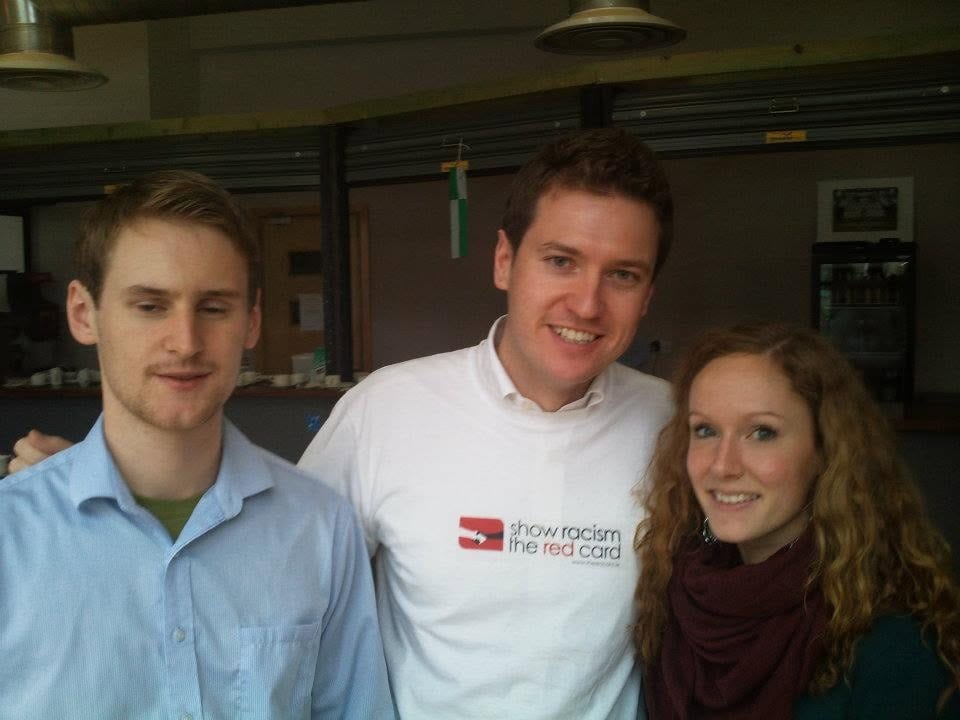
Seanán with Elin L'Estrange from Norway. She is half-Irish, half-Norwegian and she survived the massacre on Utøya island in July 2011. She came to Ireland to a Show Racism the Red Card event in the Tallaght Stadium to talk about the massacre and what her party was doing at the camp that was attacked.
He was kicked out of the team WhatsApp, and “I had to go back to my desk, gather up my stuff in my bag, and just discreetly leave without saying anything, “ he explains, adding that they “wanted him out of the office” with no discussion. “Get that troublemaker out, because he is embarrassing us, “ was their mindset, he asserts.
Procedural irregularities
“I was never told who had I somehow racially harassed, and part of a fair process is if you've been accused of something, you should be told you know, what's the complaint, who's the person, and you're meant to be given a warning, “ he explains, referencing a Supreme Court ruling from 2023 which reaffirmed that immediate suspension is only justifiable in cases of cases of extreme urgency and serious risk to public safety. “This is where it all gets a bit weird and sinister, and this is why I went to the Workplace Relations Commission, “ he says.
“I want an investigation, “ he told them. “I don't want to be people thinking somehow I'm racist, which I'm totally not. That one really hurts me now, I can tell you, that one really pissed me off because anybody who knows me knows how kind of totally open and cultural and kind of excited I am about just diversity, “ he says, adding that “I was accused of something I didn’t do and I wasn't given a chance to defend myself”.
His recruiter, Orange Recruitment, called him slowly thereafter, asking what had happened, and ostensibly at the request of the FSAI, tried to convince him not to proceed with the request for the investigation.
“I spoke to them to find out at like half 9 in the morning. I'm like, what's the legislation or the policies or whatever?, “ he says. She started “roaring down the phone”, in a “very abrupt and very nasty manner”, telling him that “this is not the Great Debate”. He insisted on an investigation, and “she kept saying, like, what do you want to get out of this? Like, what do you want to get out of it?, “ he recalls.
“It took me a week or more to get a reply back and they finally agreed. My thinking about this is they didn't want an investigation. That was why they didn't send me anything any sooner, “ he says.
He kept pushing for an investigation, which required persistent emailing, and was eventually allowed to proceed. They told him he does not have the right to cross-question. Seemingly, they also bureaucratically delayed the process, forgetting to send the relevant documents containing 3 written complaints from staff members, and then re-sending them, by registered post, which only arrived for Christmas Eve.
Stress and anxiety
The events took a toll on his mental health. “I was not sleeping right and stuff, and I had to go to the doctor to get help to get anti-anxiety and anti-stress pills because I had never experienced anything like this before, “ he says, explaining that he has "been basically ambushed”. “I was sitting in my apartment trying to cope with the whole thing, and I would just realise, I'm not going to do this emotionally, I'm not strong enough, “ he recalls.
“Fuck, sorry, this is getting to me, “ he says, as he begins to cry over the phone when he recalls his investigative disciplinary meeting in January 2025. At this meeting, he was charged with violating the dignity and respect policy, as well as the email usage policy of the company. The outcome of the investigation, sent in March 2025, found no basis for the former, but found a violation in the latter, the lesser of the two charges.
A few days after this meeting, he received his subject access request - a legal mechanism which can be used to request data held on an individual from any organisation - with a shocking revelation. Notes from HR around the time of the administrative leave charged him with violating the dignity and respect policy and the email usage policy, but he was only informed of the former, and not the latter. This left him unable to prepare for his defence at the investigation meeting, a bureaucratic sleight of hand from what seems like a sleazy act of deliberate negligence.
“I was like, well, hold on, you didn't mention that in this meeting, so why are you now bringing up a second one that I should have been told about straight away? If you wanted to suspend me because of the violation of the email policy, why wasn't this mentioned?, “ he says, adding that he was “left hanging with the disgusting allegation of racial harassment for months", which was later disproven.
“I made my complaints to the WRC that I had been unfairly dismissed, “ he says, as crucial information was hidden from him which could have led to a different outcome of the investigation. “Why didn't they just talk to me in the first place? It would have all been cleared up. And this is why I found it very suspicious, “ he explains. He sent letters to the CEO, Chair of the Board and other key management personnel at the FSAI, but he was “stonewalled”.
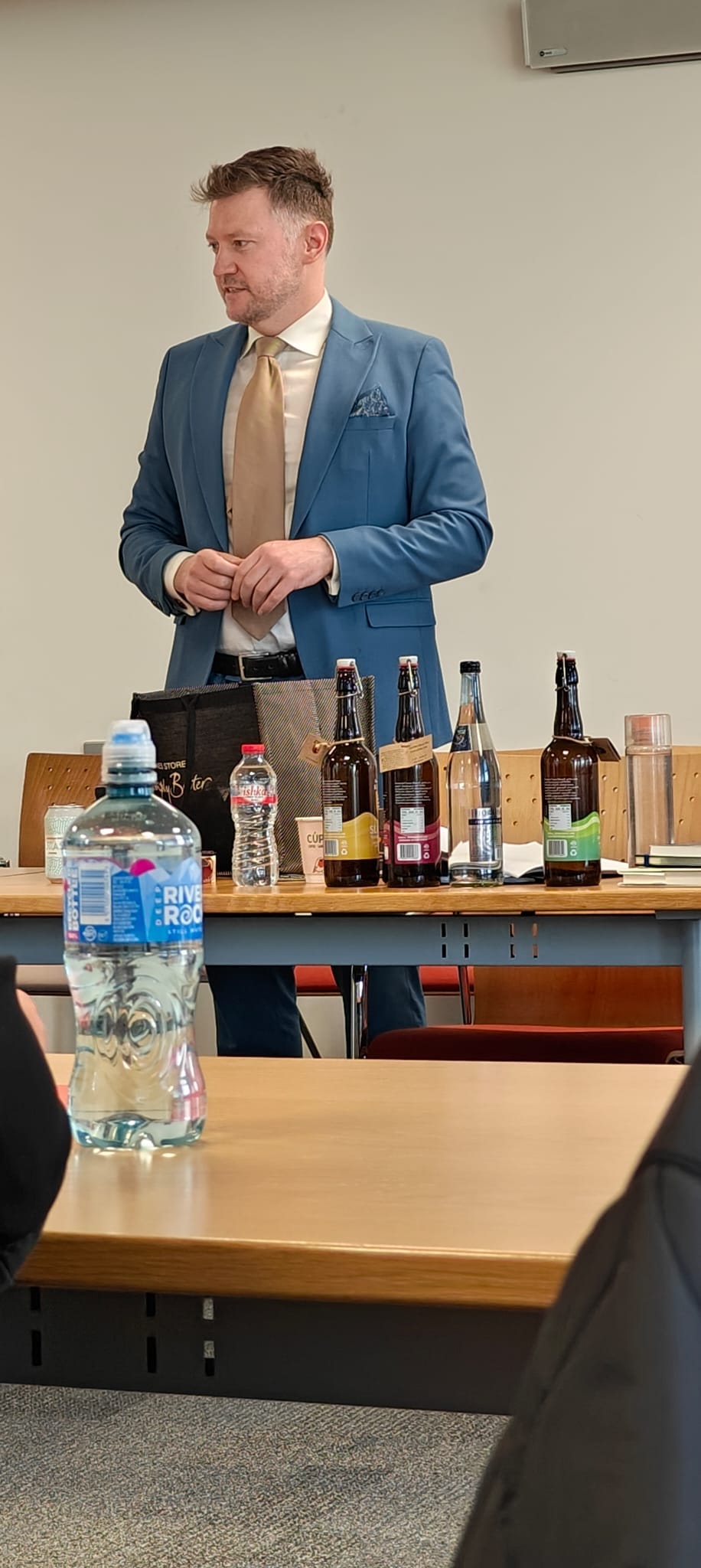
“The solicitors are telling me that they did not know how to deal with the situation, and so, they overreacted, “ he explains. The WRC hearing would go on to further reveal procedural irregularities. “The HR manager was sitting right beside the barrister of the company. He said she had received other complaints orally, but I was never told that, “ he explains, adding that “so that's not really fair for me and I'm not able to defend myself”.
The political hinterland
“There's a culture perhaps of silly anti-Irish attitudes. It's not even anti-Irish, it's probably anti-Sinn Féin attitudes. That shouldn't be allowed to go on in an Irish state agency in the 2020s, “ he says, and remembering his first day in office, “It seared into my brain because I'd literally just arrived back in Ireland, and then within minutes of me arriving, I was being asked, was I a member of Sinn Féin? That's something the British would have been asking over 100 years ago, “ he adds.
“I want the truth out there, “ he says. “The Irish government should be a bit worried that that kind of stuff is still going on in an Irish state agency in the 2020s, " he explains, and points to the wider context. “It is an overarching institutional laziness. Only 50% of the laws of Ireland are translated into Irish. We do not have a functioning infrastructure for citizens who would like to exercise their constitutional rights in our indigenous language ”. This is the elephant in the room, which no one wishes to confront, he says. “And this is why I'm doing this. Like, I'm not looking for money, I'm not looking for whatever. I want this kind of toxic culture eliminated out of Irish government agencies. That there's slop and there's double standards that are happening with Irish that wouldn't ever be tolerated in English, “ he says.
“My psychologist, she said to me, she knows from Irish people and Irish history, this is the effect of colonial history, that Irish people are afraid of being to the point. And my style of communication was way too direct for a lot of people, “ he explains the reaction of FSAI, adding that “we were colonised and controlled by England for hundreds of years. We still are a little bit in the north, and that's going to take centuries to unwind”. There is a certain “hostility”, he says, which should be cracked down on, in order to improve the standing of Irish.
“The Irish state has both a legal problem and a moral problem. The Irish state is saying that it wants everybody to go to school and learn Irish, the only compulsory subject, and it's saying Irish is the first official language and it takes precedence over English. And then the people who do exactly what the state wants them to do, which is to go to school and become fluent in Irish, they face the problems and the failures and the hostility. But the people who didn't succeed in learning Irish, everything is set up for them and they have it easy, “ he puts succinctly.
“The government needs to come down hard and tell people, look at the freaking Constitution, look at the the Official Languages Act, understand what it's meant by it, “ he says, saying that “fact that I was treated that way and told I somehow racially abused people or racially harassed people without knowing who these are, without being given a chance to defend myself, without being given information, this is totally unfair, “ and “reflective of the toxic culture surrounding Gaeilge".
“Irish speakers shouldn't be afraid to use their constitutional rights and just make things happen, “ he concludes, calling for resistance against the State’s willful neglect of Irish.